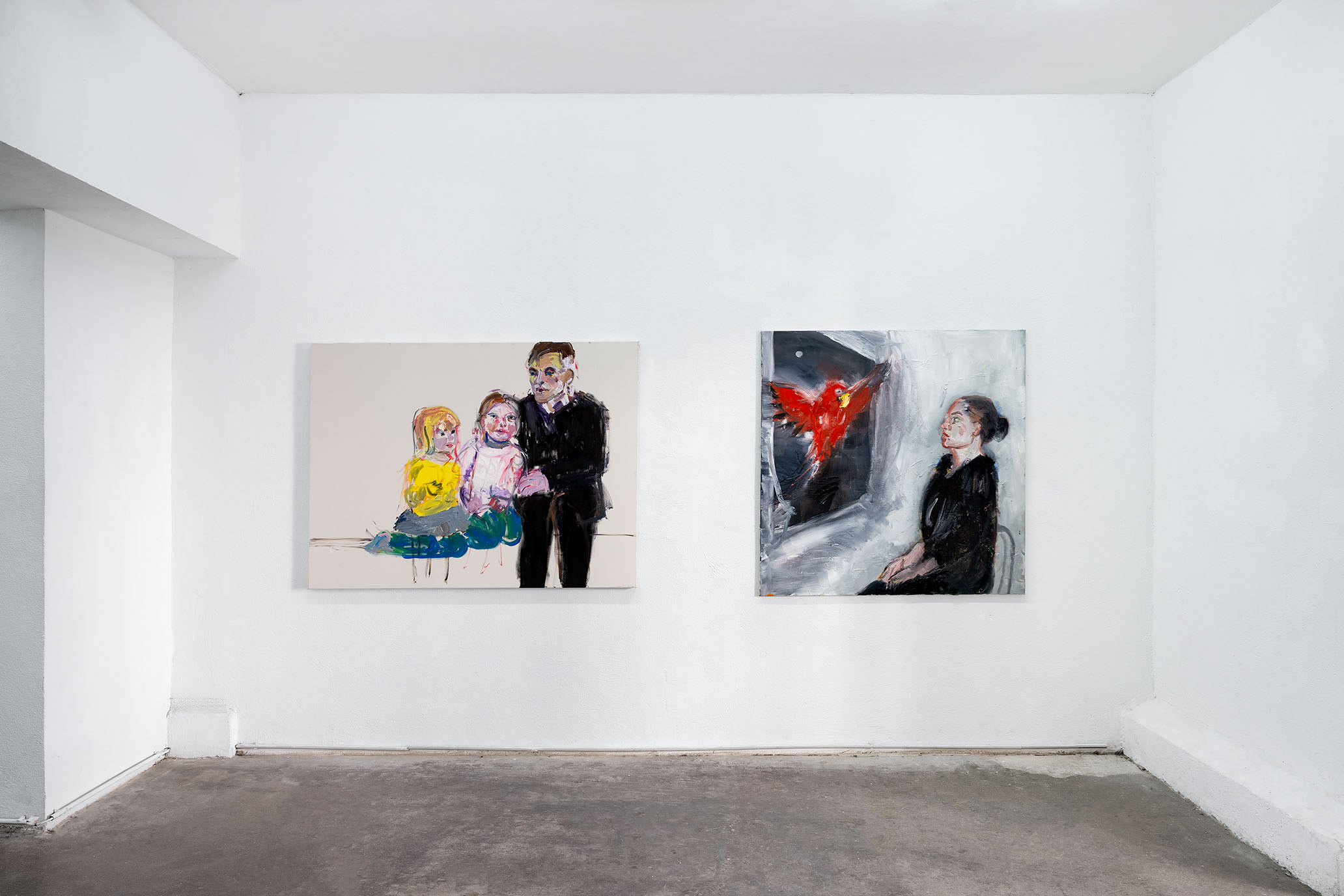
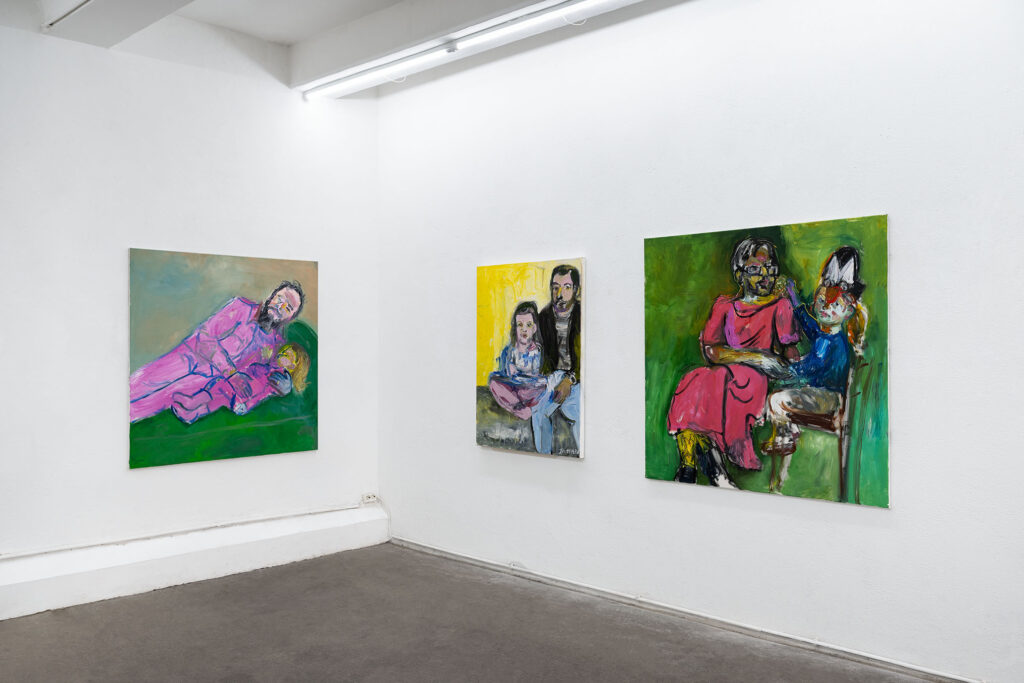
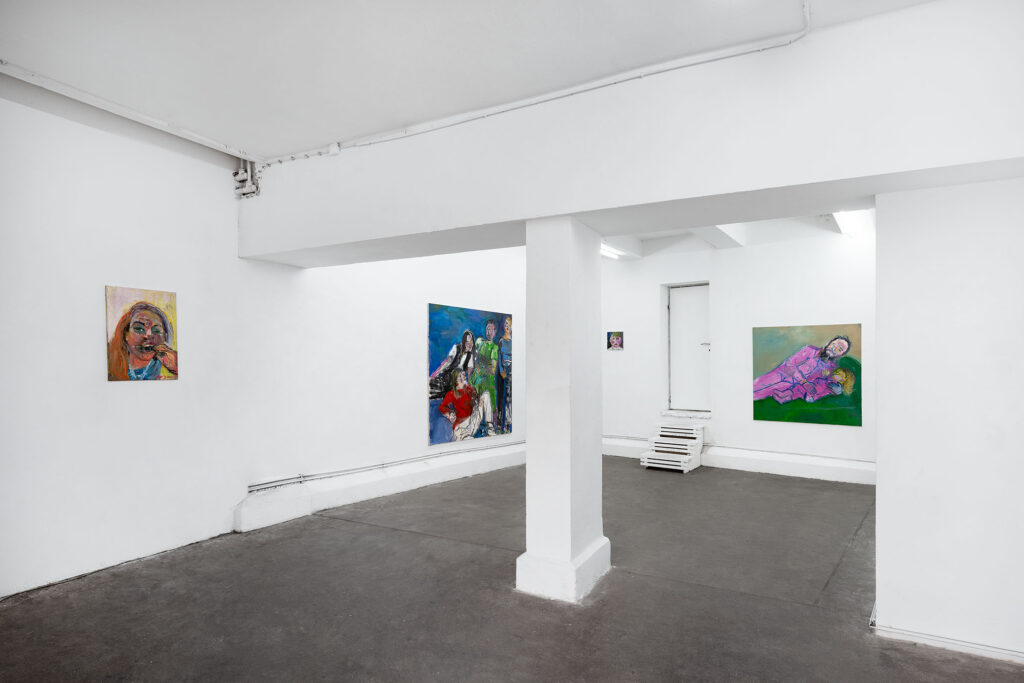
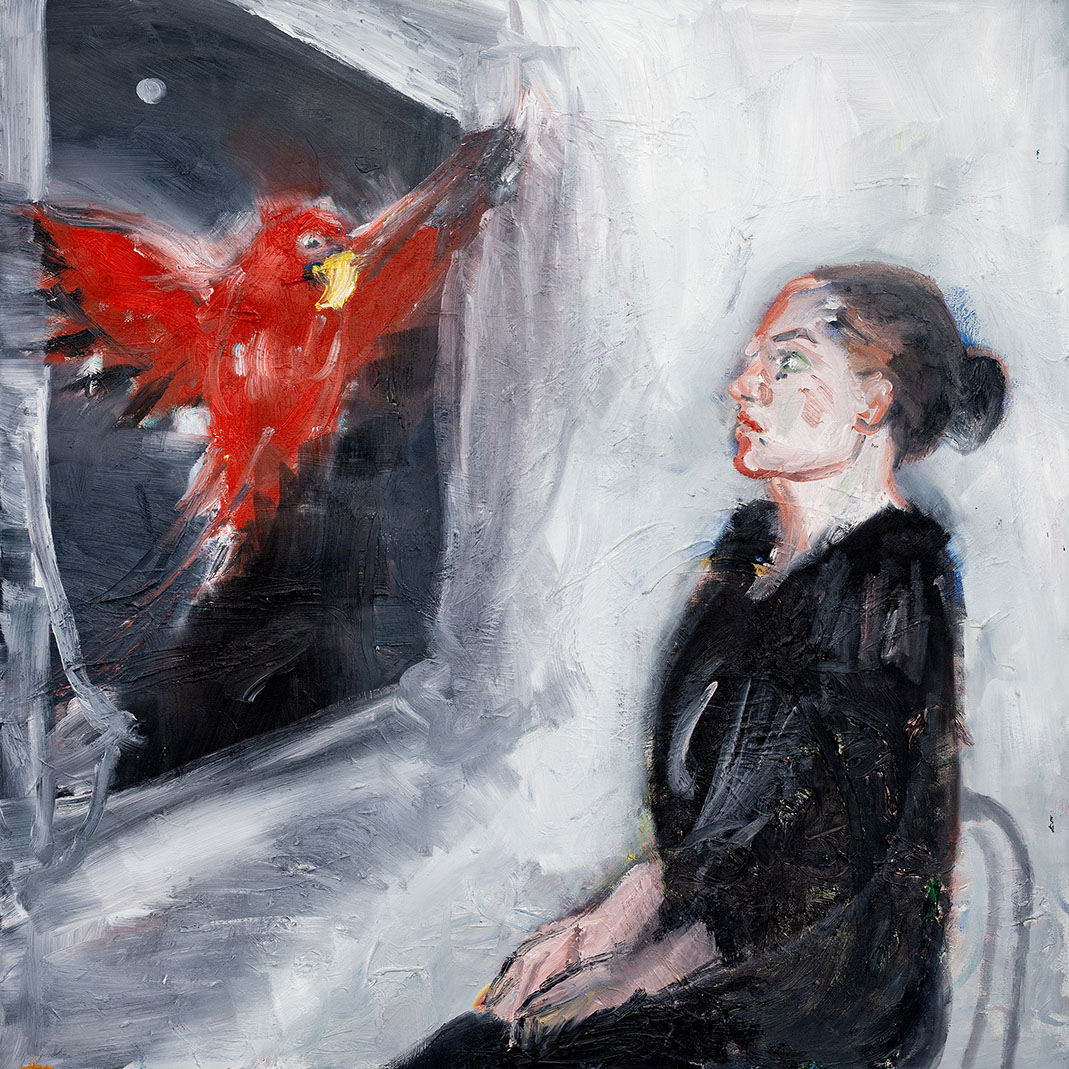
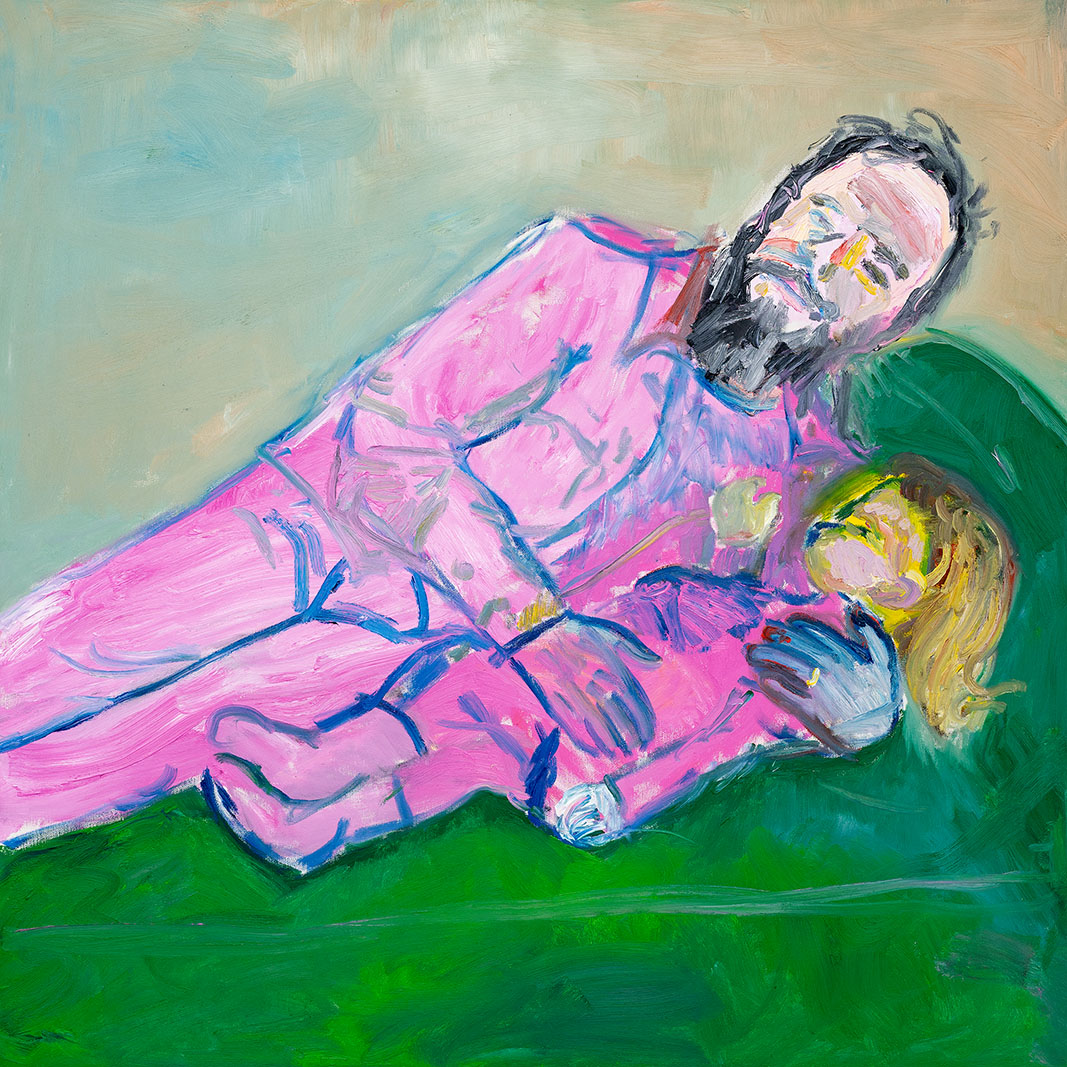
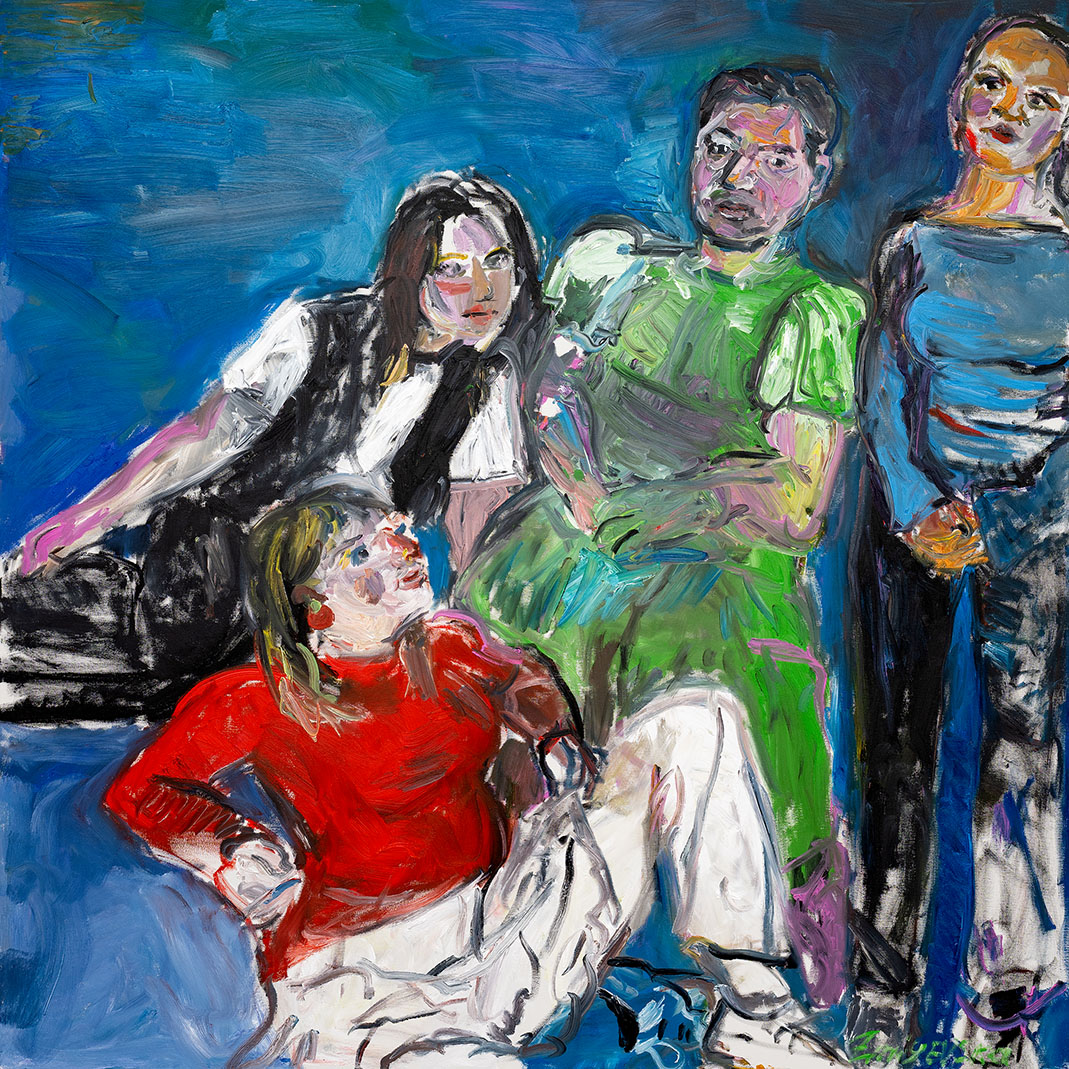
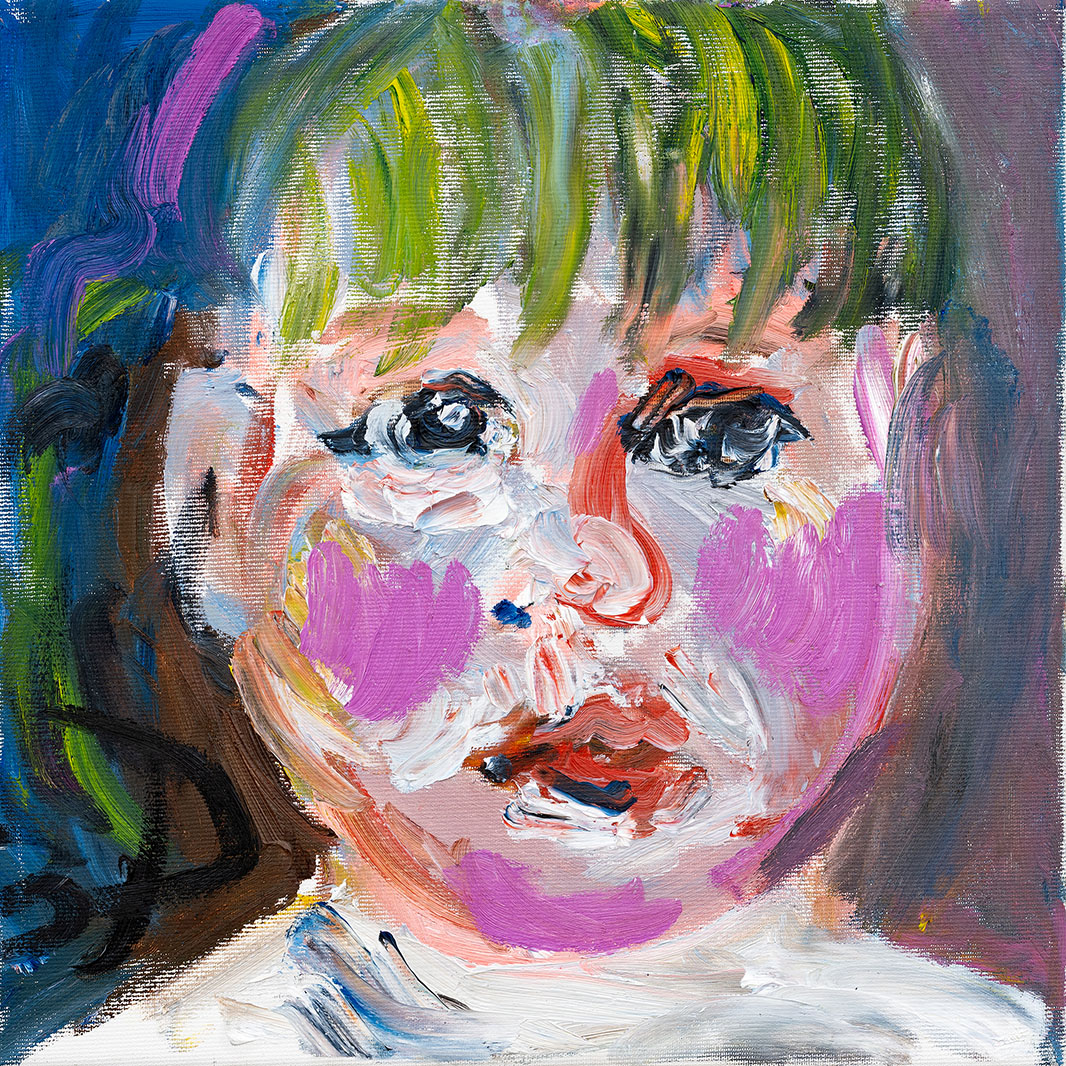
In her solo show POWERFULL = VULNERABLE, Oksana Zmiyevska brings together her very recent portraits depicting daughters and fathers. The artist approaches girlhood as a formative stage in women’s life— a pivotal moment when early perceptions of femininity and masculinity begin to take shape and assert themselves. Zmiyevska’s body of work largely focuses on women’s experiences; and her artistic language is raw, emotional, intuitive, and spontaneous. She works often on large canvases to accommodate intense feelings and urgent ideas. This expressive straightforwardness and impulsive energy result in paintings where nothing can be concealed—everything is exposed, never polished but stripped of any complaisance or refinement.
Although Zmiyevska has painted children before, this is the first time she directly addresses the relationship between fathers and daughters. Celebrated for her vivid and empathetic portraiture, the artist approaches the new series with great warmth and care, but also with a sharp eye for the emotional complexity within these bonds.
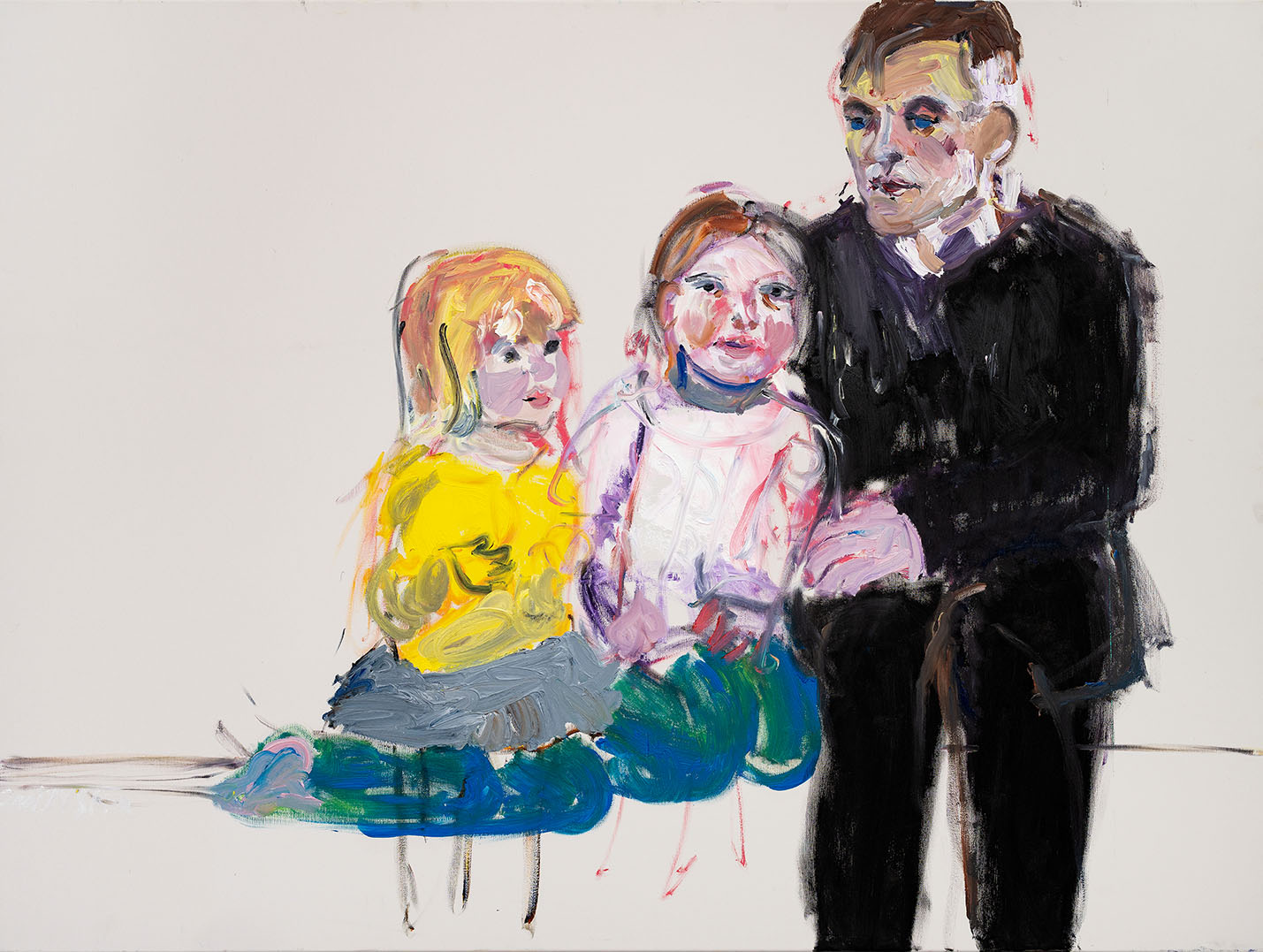
The portrait of Fenja, Nova & Johannes is rather melancholic—the father, dressed entirely in black, is preoccupied with his own thoughts; his daydreaming gaze wanders elsewhere. The girls, almost merged into a single figure, lean very close to him as if seeking protection, yet they appear more present in the moment, more aware. Painted in a strikingly sculptural manner on the white canvas, the entire group is structured around Fenja’s direct, open, and serious gaze, which provides almost the only stable point in an otherwise all-in-motion, sketch-like composition.
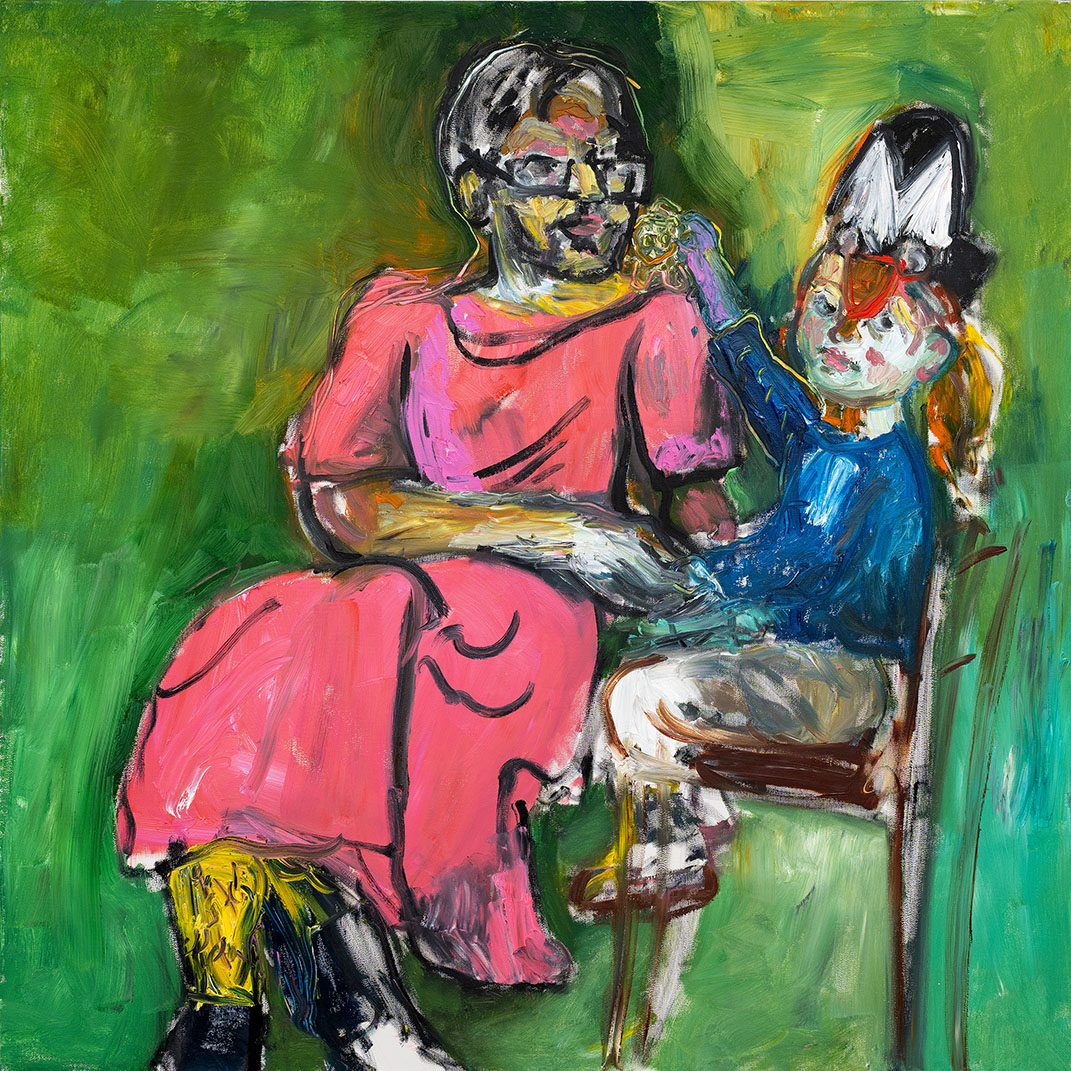
The portrait of Paula & Tom is very different—painted impasto with contrasting, thick colours, it evokes a whimsical carnival feeling. Against the dramatic, vibrant green background, the father, dressed in a coral-pink princess gown, stands out boldly. However, once again, the point that holds the painting together is the daughter’s gaze from under her large, theatrical headpiece. Suggesting the playfulness of a costume ball, the portrait is nevertheless too intense to be merely convivial. Leaning back and pushing her chair backwards, Paula could lose her balance at any moment, but her father’s hand firmly holds her in place as she teases him with a fluffy toy; we can almost hear her lively laughter. This tension between jolliness and alertness creates a wonderful dynamism in the picture.
The series of fathers and daughters truly expands Zmiyevska’s body of work. Having done much artistic research on women’s maturity, self-understanding and self-emancipation, yet for the show POWERFULL = VULNERABLE the artist develops a richly detailed, vigorous image of tender age and adolescence. Hopefully, it paves the way for the next exhibition, which shall encompass the entire journey of being a woman in this world.
Liudmila Kirsanova